
Classrooms don’t look the same anymore—and it’s not just about new screens.
Interactive Smart Boards Have Become Essential, quietly reshaping how students engage, interact and learn. The real reason behind this shift might surprise you.
The dusty erasers and screeching chalk of the 20th century have officially been relegated to the history books. In 2026, the heart of the classroom is no longer a static slate, but a high-performance, AI-integrated digital hub. For schools looking to keep pace with the EdTech trends of 2026, interactive smart boards have transitioned from a “nice-to-have” gadget to a foundational pillar of modern pedagogy.
At TechSens, we’ve watched the rapid evolution of these devices from simple projector-based screens to the sophisticated Interactive Flat Panels (IFPs) we see today. Here is why they are now non-negotiable for any forward-thinking educational institution.
1. Breaking the “Passive Learning” Cycle
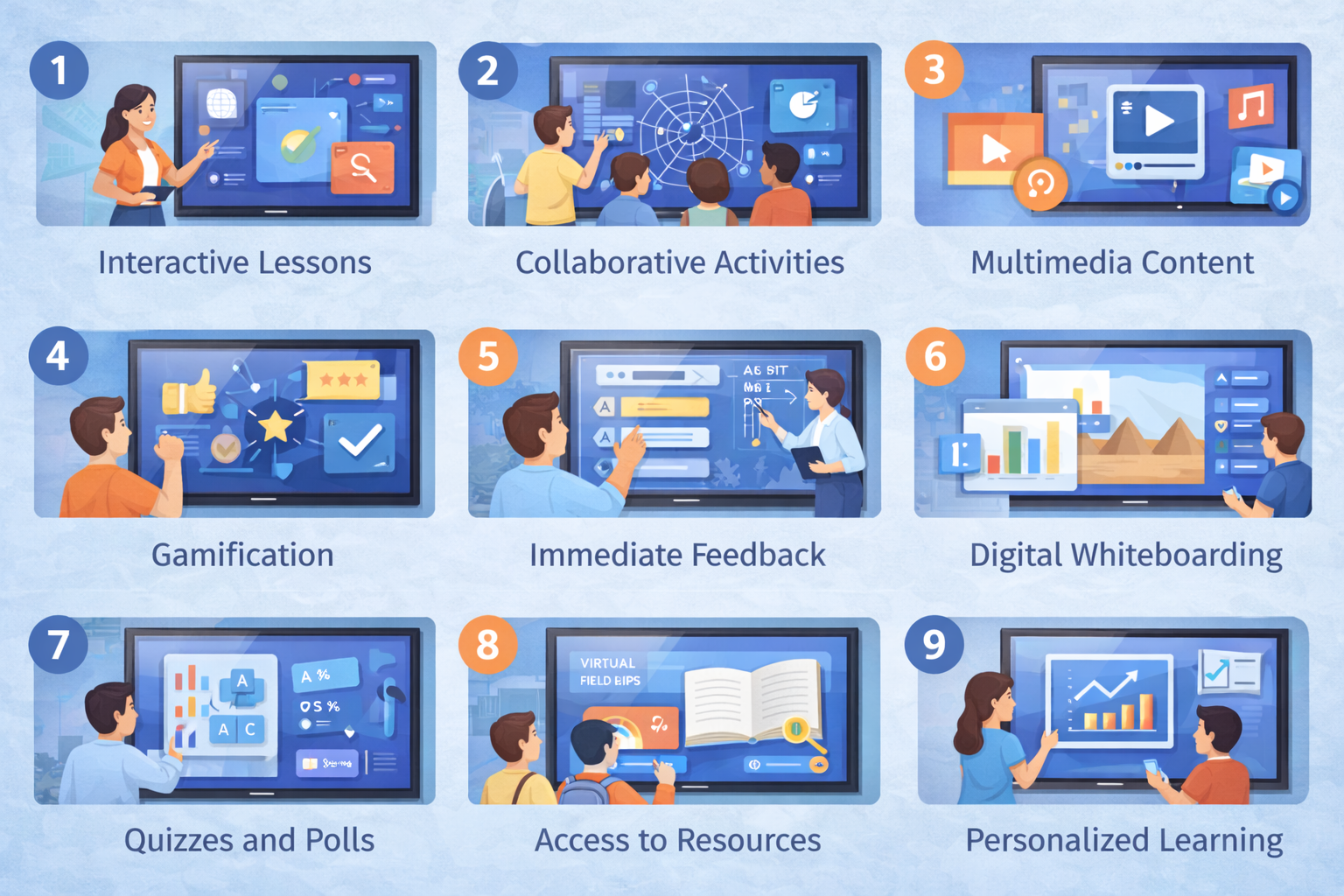
Traditional teaching often forced students into the role of passive observers. Smart boards flip this script by turning every lesson into a two-way conversation. With up to 40 unique touchpoints, multiple students can solve a math problem or label a biological cell simultaneously.
According to research published by the International Society for Technology in Education (ISTE), over 94% of educators agree that interactive technology significantly boosts student engagement. By allowing kinesthetic learners to literally “touch” their lessons, schools are seeing a marked increase in participation across all age groups.
Internal Link: Discover more about how tactile tech is changing the game in our guide on The Future of Human-Computer Interaction.
2. The Power of “Hybrid-Ready” Classrooms
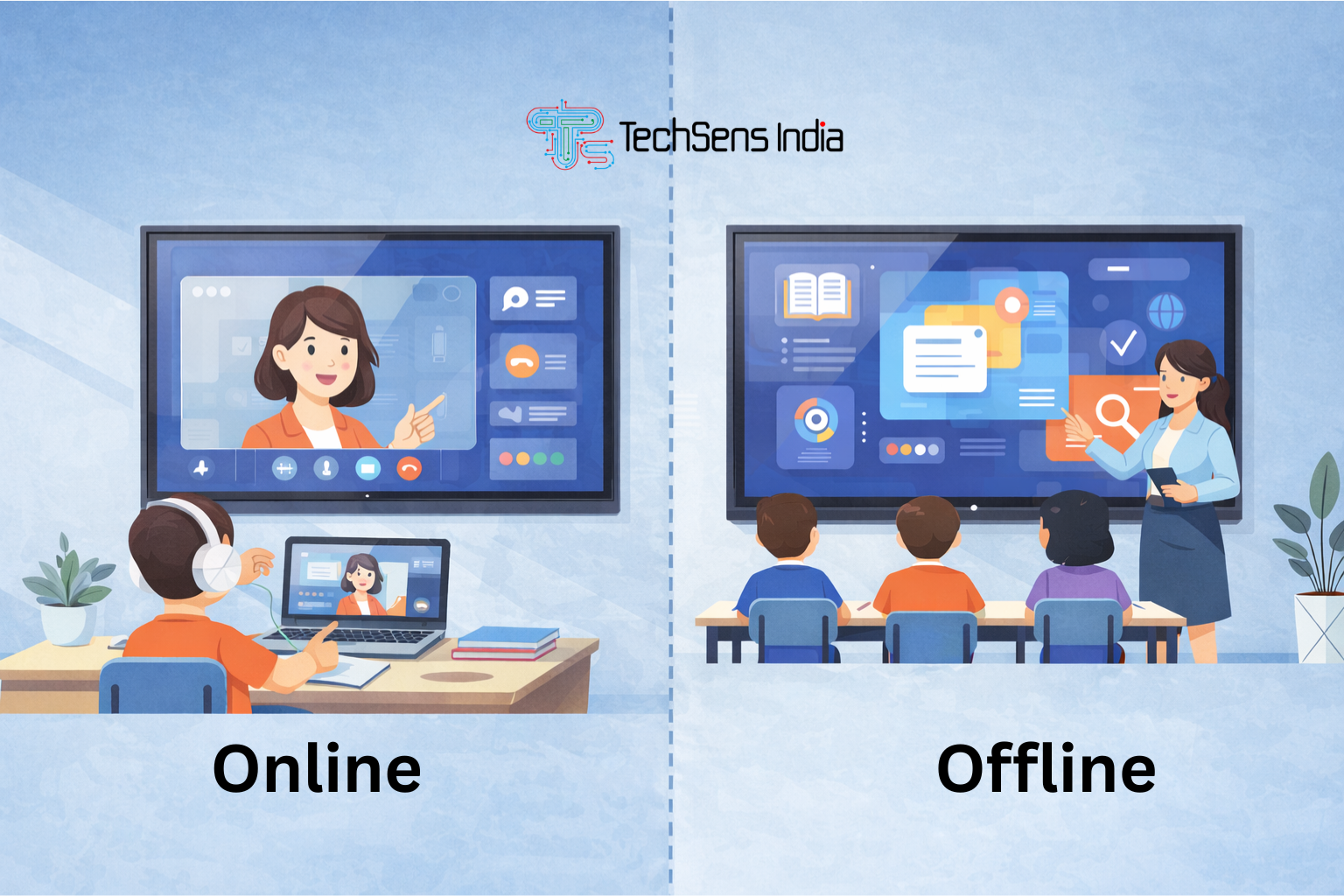
The concept of a classroom has expanded. Whether a student is sitting in the front row or tuning in from home, 2026’s smart boards ensure no one is left behind. Modern boards come equipped with built-in 4K cameras, 8-array microphones, and native support for platforms like Google Meet and Zoom.
This “Hybrid-Ready” infrastructure is vital. Educators can now record a live lesson, including all digital annotations made on the screen, and instantly share it via cloud services like Google Drive or OneDrive. This seamless continuity is a cornerstone of the World Economic Forum’s vision for the Future of Education, which emphasizes digital literacy and flexible learning environments.
3. AI: The Teacher’s New Best Friend
Perhaps the biggest shift in 2026 is the integration of Artificial Intelligence. Modern smart boards are no longer just “dumb” displays; they are powered by octa-core processors that handle real-time AI tasks, such as:
Smart Handwriting Recognition: Converting messy scribbles into clean, searchable text.
Auto-Annotation & Summarization: AI tools that can highlight key points of a lecture and generate a summary for students to review later.
Adaptive Content: Boards that suggest 3D models or videos based on the topic being discussed.
For a deeper look at the hardware driving these features, check out the latest ViewSonic 2026 EdTech Guide, which details how EDLA-certified displays are simplifying classroom management.
4. Accessibility and Inclusion
Smart boards are powerful tools for Universal Design for Learning (UDL). For students with visual impairments, 4K resolution and high-contrast settings make content legible. For those with hearing difficulties, real-time transcription and high-fidelity audio ensure they stay connected to the material.
TechSens Insight: Inclusivity isn’t just a buzzword; it’s a requirement. Boards that offer blue-light filters and flicker-free technology (like those seen in the BenQ RP04 Series) protect student eye health during long school days.
5. Data-Driven Insights
In 2026, teaching is more precise than ever. Integrated assessment tools allow teachers to run instant polls or quizzes. The results are displayed in real-time, letting the educator know exactly which concepts need more work before the class ends. This immediate feedback loop is proven to improve long-term retention and academic performance.
Internal Link: Read our review of the Top 5 Smart Boards for 2026 to find the right fit for your budget.
Conclusion: A Long-Term Investment
While the initial cost of an interactive flat panel can be higher than a traditional projector, the Total Cost of Ownership (TCO) is often lower. With no expensive bulbs to replace and lifecycles extending beyond 50,000 hours, smart boards are a sustainable, eco-friendly choice for modern districts.
The shift toward interactive teaching isn’t just about the hardware—it’s about creating a generation of students who are active participants in their own education.
-
Why have interactive smart boards become essential in modern classrooms?
Interactive Smart Boards Have Become Essential because they transform classrooms from one-way teaching spaces into dynamic, two-way learning environments. Unlike traditional chalkboards, they encourage student participation, collaboration, and hands-on learning—key factors for improving engagement and knowledge retention in 2026’s digital-first education system.
-
How do interactive smart boards improve student engagement?
Interactive smart boards break the cycle of passive learning by allowing multiple students to interact with the screen simultaneously. Features like multi-touch support, real-time problem-solving, and visual simulations help cater to different learning styles, especially kinesthetic and visual learners, making lessons more engaging and memorable.
-
Are interactive smart boards suitable for hybrid and online learning?
Yes. One major reason Interactive Smart Boards Have Become Essential is their ability to support hybrid-ready classrooms. With built-in cameras, microphones, screen recording, and cloud integration, teachers can seamlessly connect in-class students with remote learners while recording and sharing lessons instantly.
-
What role does AI play in modern interactive smart boards?
In 2026, AI-powered smart boards act as intelligent teaching assistants. They offer features like handwriting recognition, automatic summarization, smart content suggestions, and adaptive learning tools. These AI capabilities help teachers save time while giving students personalized and interactive learning experiences.
-
How do interactive smart boards support accessibility and inclusion?
Interactive smart boards are designed with Universal Design for Learning (UDL) principles in mind. High-resolution displays, real-time transcription, audio enhancements, blue-light filters, and customizable visual settings ensure that students with visual, hearing, or learning difficulties can participate equally in classroom activities.