
Schools, coaching institutes and offices across India are replacing chalkboards and projectors with touch-enabled 4K screens. The first question every buyer asks is simple: what is the real interactive flat panel price in 2026? The honest answer is that it depends on size, processor, software, warranty and service. This guide walks you through each factor so you can compare quotes with confidence and avoid paying for features you will never use.
We work with hundreds of institutions across India, and we see the same buying mistakes again and again. Buyers compare only the sticker price, ignore installation and training, or choose a screen that is too small for the room. Read on, and you will know exactly what drives the interactive flat panel price and how to judge whether a quote is fair.
What Is an Interactive Flat Panel?
An interactive flat panel (IFP) is a large 4K touchscreen that combines a display, a digital whiteboard and a computer in one device. Teachers and presenters write, draw, annotate, play videos and share screens wirelessly without a projector. Unlike older smart boards, an IFP needs no lamp replacement, no calibration and no darkened room. It switches on in seconds and works in bright classrooms.
Most panels run Android, and many accept an OPS (Open Pluggable Specification) slot-in PC for Windows. Premium models now ship with AI teaching tools, built-in cameras and microphone arrays for hybrid classes. Each of these additions affects the final interactive flat panel price, which is why two 75-inch panels can differ by more than ₹50,000.
Interactive Flat Panel Price in India 2026: Size-wise Ranges
Screen size is the biggest single driver of cost. Market listings and dealer quotes in 2026 show the following indicative ranges for education-grade 4K panels. Use these interactive flat panel price ranges as a starting point, not a final quote, because taxes, installation and bundled software vary by vendor.
| Screen size | Best for | Indicative interactive flat panel price (INR) |
|---|---|---|
| 55–65 inch | Tuition rooms, small classrooms, meeting rooms up to 25 people | ₹60,000 – ₹1,10,000 |
| 75 inch | Standard classrooms of 30–45 students, mid-size boardrooms | ₹1,00,000 – ₹1,75,000 |
| 86 inch | Large classrooms, labs, seminar rooms | ₹1,40,000 – ₹2,50,000 |
| 98–105 inch | Auditoriums, lecture halls, executive boardrooms | Custom quote, usually well above 86-inch models |
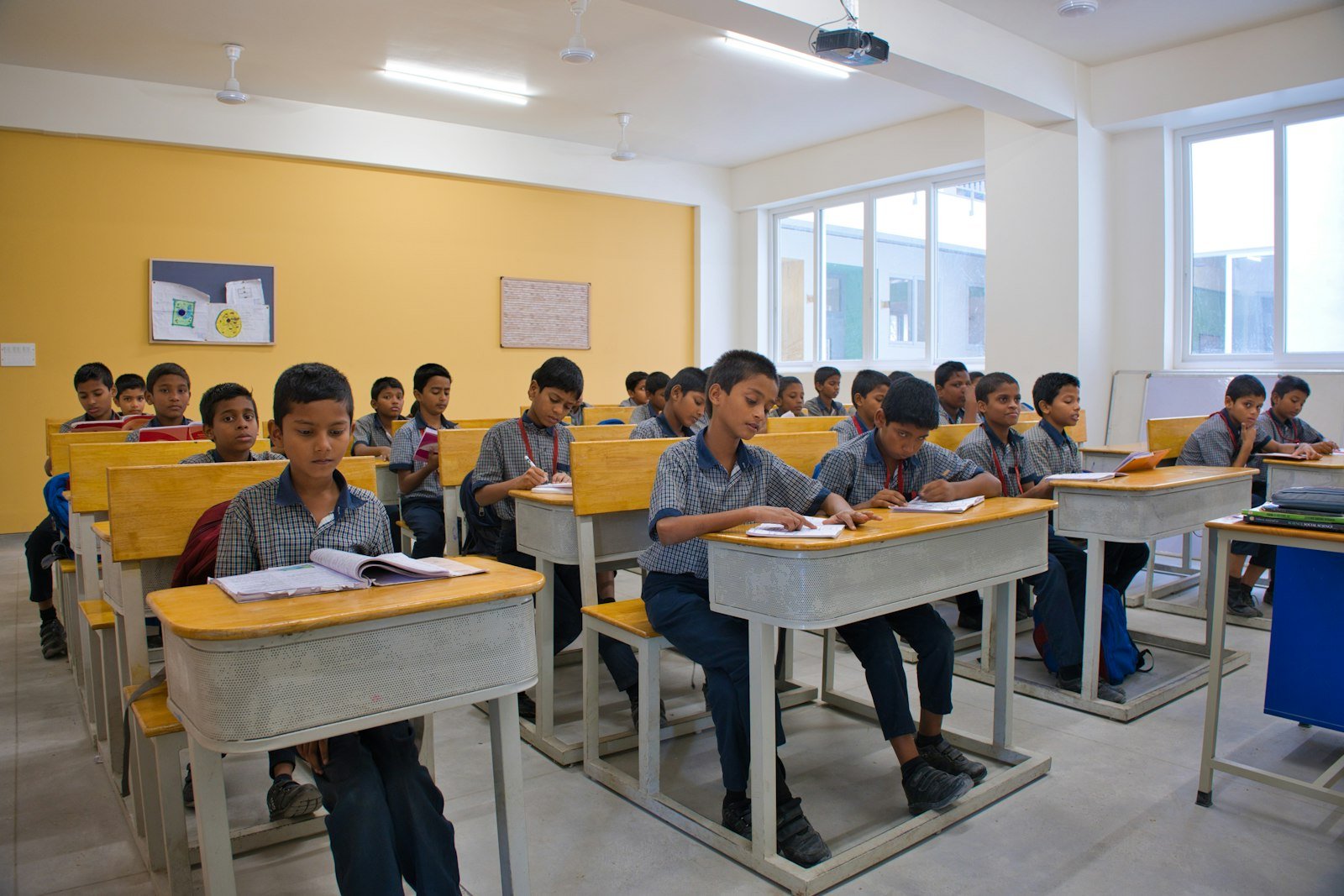
Most schools settle on the 75-inch size because its interactive flat panel price gives every student a clear view without stretching the budget. In our experience, a well-specified 75-inch panel with a good warranty and teacher training offers the best value per rupee for a typical Indian classroom.
Why the 75-inch panel dominates school orders
A 75-inch screen stays readable from the last bench of a 25-foot classroom. It also fits standard wall widths and trolley stands. When you step up to 86 inches, the interactive flat panel price jumps sharply, so reserve the larger size for rooms deeper than 30 feet or for labs where students gather close to the board.
Seven Factors That Change the Interactive Flat Panel Price
Two panels with the same size can carry very different price tags. These seven factors explain the gap.
1. Processor, RAM and storage
Entry-level panels use basic Android chipsets with 2–4 GB RAM. They handle whiteboarding and video playback but slow down with heavy apps. Mid-range and premium panels offer 8 GB RAM or more, faster storage and optional OPS computers with Intel Core i5 or i7 processors. A stronger processor raises the interactive flat panel price, but it also keeps the panel responsive for five to seven years.
2. Operating system and Google EDLA certification
Google EDLA certification lets the panel run the Google Play Store and Google apps officially. Schools that rely on Google Classroom, Drive and YouTube benefit from it. Certified panels with the latest Android version cost more, yet they receive security updates longer, which protects your investment.
3. Touch technology and writing experience
Most panels use infrared touch with 20 to 40 touch points. Higher touch-point counts let several students write together. Zero-bonding glass reduces the gap between the pen tip and the ink, so writing feels natural. Better touch hardware nudges the interactive flat panel price upward but makes teachers far more likely to use the board daily.
4. Display brightness and anti-glare glass
Classrooms with large windows need 400 nits or more and anti-glare glass. Cheaper panels often stay near 350 nits and look washed out in sunlight. Check the brightness and contrast ratio in the specification sheet before you compare each interactive flat panel price.
5. Built-in camera, microphones and AI tools
Hybrid teaching has made built-in cameras and microphone arrays popular. Panels such as our Sense PRO add an optional 48 MP 4K camera, an 8-microphone array with AI noise cancellation and fingerprint access control. AI curriculum search, math solvers and thousands of 3D models also raise the value of the panel. These features increase the interactive flat panel price, but they remove the need to buy a separate webcam, speakerphone and content subscription.
6. Software, content and updates
Whiteboard software, screen-sharing apps and lesson recording tools vary widely. Some brands charge annual licence fees; others include lifetime updates. Ask every vendor whether software updates and content libraries are free for the life of the panel, because recurring fees quietly inflate the true interactive flat panel price.
7. Warranty, installation and training
A three-year onsite warranty adds a little to the interactive flat panel price compared with a one-year carry-in warranty, but it saves you from logistics headaches when a panel fails mid-term. Professional wall mounting, cabling and teacher training also matter. Panels left unused because teachers were never trained are the most expensive panels of all.
Hidden Costs Buyers Often Miss
A low interactive flat panel price can look attractive until extra charges appear. Before you sign, confirm whether the quoted interactive flat panel price includes the following items:
- GST: Check whether the quote is inclusive or exclusive of tax.
- Wall mount or mobile stand: Trolley stands with height adjustment cost extra.
- OPS PC: Many panels list the OPS module as an optional add-on.
- Stylus pens and remote: Replacement pens add up over time.
- Electrical work and UPS: Panels need stable power, and a UPS protects them from surges.
- Annual maintenance contract: After the warranty ends, AMC charges keep support running.
- Teacher training: Some vendors charge per session.
Add these costs to the base figure and compare the total cost of ownership over five years. That number tells you more than the headline interactive flat panel price ever will.
Interactive Flat Panel vs Projector: Cost Over Five Years
Many schools still ask whether a projector is cheaper. A projector setup looks affordable upfront, but lamps, filters, screens and frequent repairs raise its running cost. Projectors also need darkened rooms and periodic calibration. An interactive flat panel runs for 50,000 hours or more with little maintenance, consumes less power than older projectors and offers real touch interaction.
| Factor | Projector + whiteboard | Interactive flat panel |
|---|---|---|
| Upfront cost | Lower | Higher |
| Consumables | Lamps, filters, screens | Almost none |
| Image quality in daylight | Poor to fair | Sharp 4K |
| Touch and annotation | Limited or none | Multi-touch, multi-user |
| Lifespan | 3–5 years typical | 7+ years typical |
When you spread the interactive flat panel price across seven years of daily use, the cost per teaching hour often drops below that of a projector setup.

How to Choose the Right Panel for Your Budget
Follow these steps to match your budget with the right panel and avoid overspending.
- Measure the room. Note the distance from the board to the last row. Choose 65 inches for rooms up to 18 feet, 75 inches up to 25 feet and 86 inches beyond that.
- List the must-have features. Decide whether you need Google EDLA, a built-in camera, OPS support or AI tools. Skip features your teachers will not use.
- Request a live demo. Ask teachers to write, erase, share screens and open their usual apps. A demo reveals touch lag and software gaps that spec sheets hide.
- Compare total cost, not sticker price. Combine the interactive flat panel price with installation, accessories, training and AMC.
- Check service reach. Confirm that the vendor offers onsite support in your city and a clear response time.
Interactive Flat Panel Price for Bulk and Government Orders
Schools that equip ten or more classrooms usually receive a lower interactive flat panel price per unit. Group purchases also simplify training, because every teacher learns one interface. Government and aided schools often buy through tenders or the GeM portal, where specifications such as brightness, touch points, warranty and Android version decide eligibility. Prepare a clear specification sheet before you invite bids, and you will receive comparable quotes instead of a confusing mix of models.
Many institutions also phase their rollout. They equip senior classes and labs first, gather feedback and then extend panels to junior sections. Phasing spreads the interactive flat panel price over two or three budget cycles while teachers build confidence.
Features Worth Paying More For
Not every premium feature earns its cost. These features consistently pay off in Indian classrooms:
- Auto-save and session recovery: Frequent power cuts can wipe a lesson. Panels that auto-save every minute protect teacher work.
- Wireless screen sharing: Teachers present from phones and laptops without cables.
- Lesson recording and sharing: Students revise from recorded lessons, and absent students catch up.
- Multi-language translation: Teachers in multilingual classrooms translate content into Indian languages instantly.
- 3D learning models: Science and geography lessons become visual and memorable, in line with NEP 2020 goals.
Our Sense EDGE panel includes many of these tools, such as session auto-save every 60 seconds, instant sharing through QR code or WhatsApp, and multi-language translation, on Google EDLA-certified Android 16.
Common Mistakes That Inflate the Interactive Flat Panel Price
- Buying the biggest screen by default: An 86-inch panel in a small room strains eyes and wastes money.
- Ignoring software licences: Annual software fees can add thousands of rupees every year.
- Skipping training: Untrained teachers use the panel as a TV, and the investment never pays back.
- Choosing unknown brands without local service: A cheap panel with no service centre nearby becomes costly the first time it fails.
- Not checking upgrade paths: Panels without OPS support or OS updates age quickly.
Interactive Flat Panel Price by Use Case
The same panel serves very different users, and each group weighs the interactive flat panel price differently. Match your purchase to your use case.
K-12 schools
Schools need durability, simple software and strong content libraries. A 75-inch Android panel with Google EDLA, auto-save and 3D learning content fits most classrooms. Schools that buy for many rooms should negotiate the interactive flat panel price as a package that includes training for every teacher.
Coaching institutes
Coaching centres record lectures and reuse them across batches. They benefit from built-in cameras, microphone arrays and lesson recording. The interactive flat panel price rises with these features, yet one recorded lecture library can serve thousands of students, so the payback period stays short. Institutes that want a full recording space can combine a panel with our smart teaching studio setup.
Colleges and universities
Larger lecture halls need 86-inch or 98-inch panels, or a fine-pitch LED wall for very big rooms. Faculty often prefer OPS PCs for specialised software. Here, the interactive flat panel price competes with the cost of high-end projectors and LED displays, and the panel wins on clarity and interactivity.
Corporate boardrooms
Offices use panels for video calls, brainstorming and dashboards. They value native Zoom, Teams and Meet support, wireless casting from laptops and a clean, cable-free table. A 65 or 75-inch panel with a good camera and microphone often replaces three separate devices, which offsets the interactive flat panel price.
Sample Budget: Equipping Ten Classrooms
Here is how a mid-size school might plan its budget. The figures are indicative and show the structure of a quote rather than a fixed offer.
| Item | Quantity | What to check |
|---|---|---|
| 75-inch interactive flat panels | 10 | Base interactive flat panel price, warranty years, Android version |
| Wall mounts and installation | 10 | Included or charged per room |
| Online UPS units | 10 | Backup time and rating |
| Teacher training sessions | As needed | Number of sessions, refresher training |
| AMC after warranty | Yearly | Response time, onsite coverage |
When you lay out the quote this way, you compare vendors on equal terms and spot inflated line items quickly.
Questions to Ask Every Vendor
- Does the quoted interactive flat panel price include GST, installation and delivery?
- Is the panel Google EDLA certified, and which Android version does it run?
- How many years of onsite warranty do you offer, and where is your nearest service team?
- Are software updates and content libraries free for the life of the panel?
- How many teacher training sessions do you include?
- Can you arrange a live demo in our classroom?
Clear answers to these questions protect you from surprise costs and help you judge whether an interactive flat panel price reflects real value.
Frequently Asked Questions
What is the average interactive flat panel price in India?
For a 75-inch education panel, most schools pay between ₹1 lakh and ₹1.75 lakh in 2026, depending on processor, software, warranty and bundled services. Smaller 65-inch panels cost less, while 86-inch and larger panels cost considerably more.
Does the interactive flat panel price include installation?
Not always. Some vendors include wall mounting and a basic demo, while others charge separately for mounting, cabling, trolley stands and training. Ask for an itemised quote.
Is an OPS PC necessary?
No. Modern Android panels handle whiteboarding, browsing and video smoothly. Choose an OPS PC only if teachers need Windows software, heavy simulations or specific desktop applications.
How long does an interactive flat panel last?
Quality panels are rated for around 50,000 hours of display life. With normal school use, that equals well over a decade of operation, although software support usually decides the practical lifespan.
Can I get an interactive flat panel on EMI or lease?
Many vendors and financing partners offer EMI or leasing plans for institutions. These plans spread the interactive flat panel price over monthly payments and help schools upgrade several classrooms at once.
Get an Accurate Quote for Your Classrooms
The right interactive flat panel price depends on your rooms, your teachers and the way you teach. Techsens India supplies AI-enabled Senses interactive panels in 65, 75, 86, 98 and 105-inch sizes, with installation, up to three years of complimentary teacher training and regular software updates. Our team visits your campus, measures your rooms and recommends the exact configuration you need, nothing more and nothing less.
Book a free live demo today, and see how a Techsens panel performs in your own classroom before you decide.