
I watched my daughter’s teacher struggle with a flickering projector during a geometry lesson last month. Meanwhile, at the school down the street, students were manipulating 3D shapes on an interactive display with their fingertips—actually excited about math class.
That contrast says everything about where we are in 2026. Smart classrooms aren’t a luxury anymore. They’re essential.
The Reality Check
After eight years implementing educational technology across India, I’ve learned one thing: this isn’t about fancy gadgets. It’s about meeting students where they actually are.
Today’s kids have grown up swiping and tapping. They expect visual feedback and interactive experiences. Asking them to sit through static presentations is like asking us to learn from stone tablets. It’s not that they can’t—it’s that there’s a dramatically better way.
What I’ve Seen in Real Classrooms
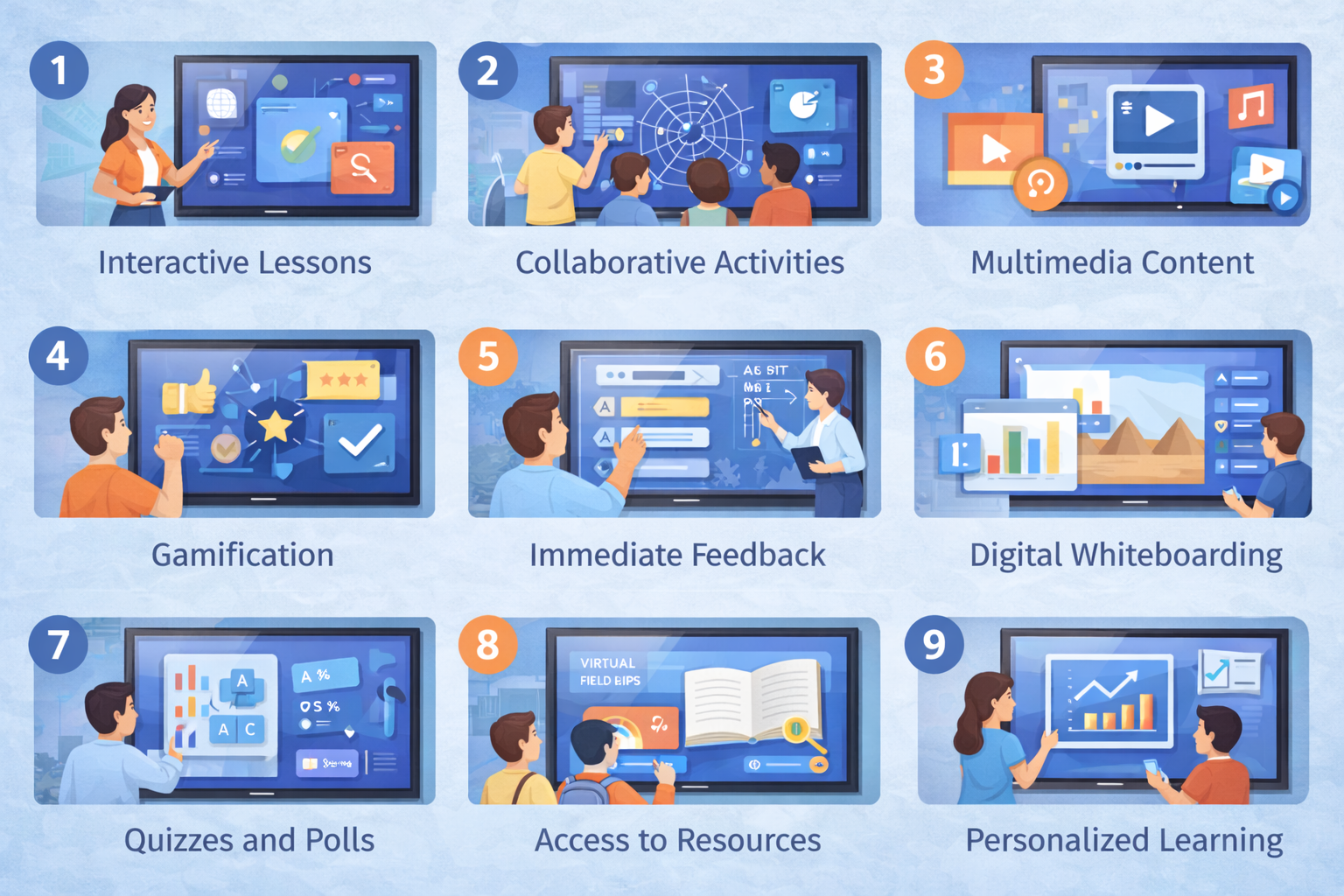
Last semester, I observed a history teacher using a TechsensIndia interactive flat panel. She pulled up a World War II timeline, and students could touch different events to explore photos, videos, and documents. One quiet student who rarely participated spent twenty minutes diving deep into topics on her own initiative.
Her teacher told me: “I’ve been trying to reach her all year. One interactive lesson changed everything.”
Research shows engagement rates increase by up to 80% with interactive displays, but you don’t need statistics when you see a student’s eyes light up as they solve problems by physically manipulating concepts on screen.
Why Waiting Isn’t an Option Anymore
Digital Fluency Is Non-Negotiable: A hiring manager in Bangalore told me recently: “We need people who can collaborate digitally and adapt to new platforms instantly.” By 2026, nearly every career requires this. Students learning in traditional classrooms are years behind their peers.
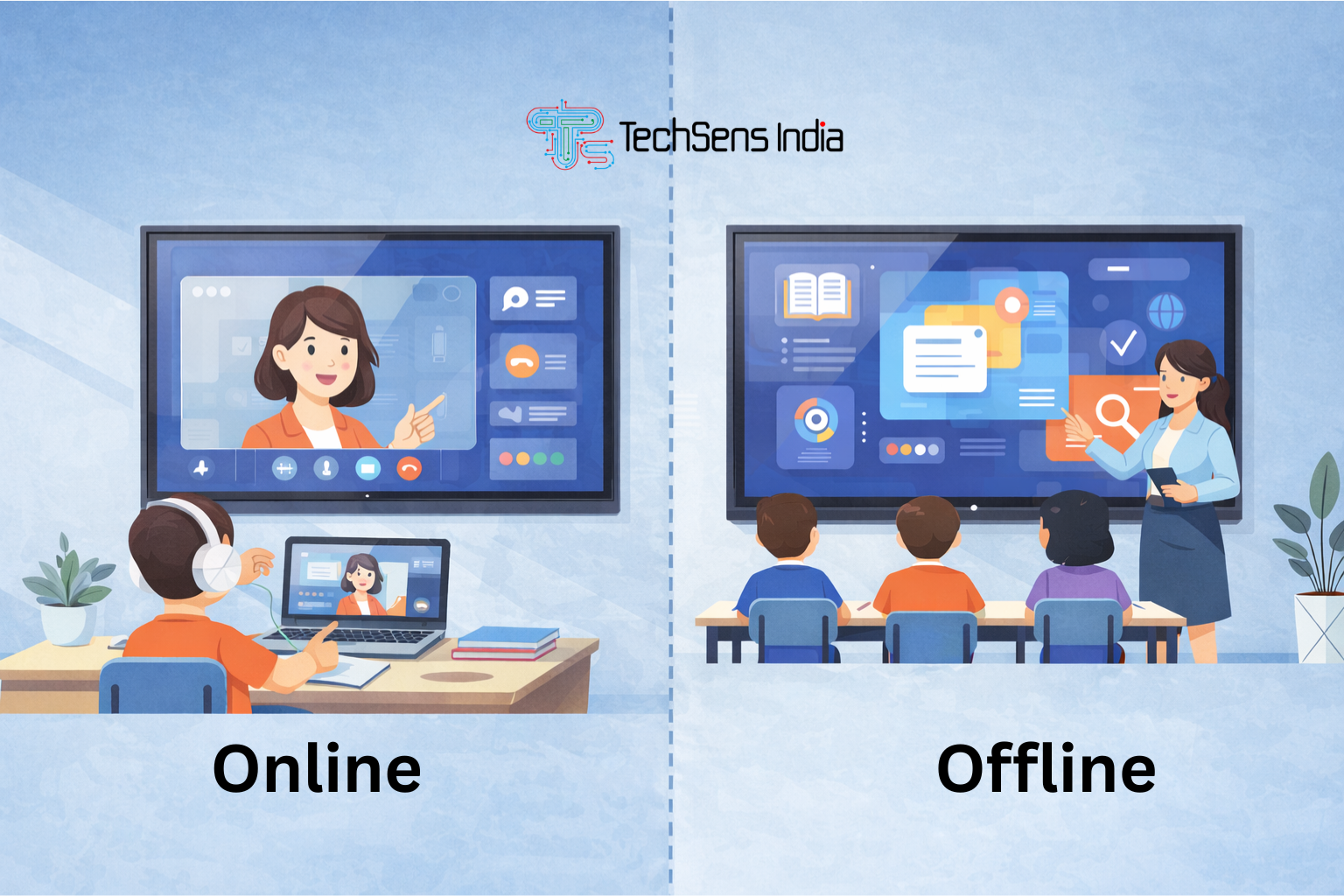
Flexibility Matters: Remember 2020? Smart classrooms aren’t just resilient—they’re necessary. Schools with TechsensIndia panels transition seamlessly between in-person, hybrid, and remote learning. During last flu season, one principal told me: “Teachers had half their class in person, half at home, all interacting with the same content. Five years ago, that would’ve been impossible.”
The Results Are Clear: Schools with smart classroom solutions report 23-42% improvement in STEM test scores and 67% of teachers say students participate more willingly. But beyond data, I’ve watched struggling students thrive when they can physically interact with concepts instead of just watching them.
Why TechsensIndia Stands Out
I’ve evaluated dozens of interactive flat panel manufacturers. Here’s why TechsensIndia consistently tops my recommendations:
Built for Reality: They’re engineered for power fluctuations, dust, heat, and classes of 40+ students—our actual conditions, not idealized labs.
Teachers Use Them: I’ve seen expensive smart boards sit unused because they’re too complicated. TechsensIndia’s interface is so intuitive that teachers master it in one training session. The best technology is the one that actually gets used.
They Last: Installations I’ve tracked from three years ago are still running perfectly with daily use. In education, where budgets are tight, durability isn’t a luxury.
The Uncomfortable Truth
“We’ll upgrade next year” is a conversation I have too often with administrators. I understand—budgets are tight. But here’s what I’ve observed:
Schools without smart classrooms lose students to institutions that have them. Parents notice which schools invest in their children’s futures. In cities like Delhi, Mumbai, and Bangalore, outdated infrastructure is a dealbreaker.
More importantly, students graduating without digital fluency struggle in college and careers. That “savings” from waiting becomes a cost students carry for years.
My Honest Take
After a decade in educational technology, smart classrooms have crossed from “nice to have” to “essential infrastructure”—like electricity or internet.
The question isn’t whether to implement this technology. It’s whether you’ll do it proactively or be forced to catch up later at greater cost.
TechsensIndia’s interactive flat panels aren’t flashy gimmicks—they fundamentally improve how teaching and learning happen. They meet students where they are, expand what teachers can do, and prepare everyone for a future that’s already here.
Visit a school using smart classrooms. Watch how students interact with interactive flat panels versus traditional methods. Talk to teachers actually using the technology. See the difference yourself.
Every day in outdated classrooms is a day our students fall behind where they need to be. In 2026, we have the tools to deliver better. The only question is whether we’ll use them.
-
What are smart classrooms, and why are they essential in 2026?
Smart classrooms combine digital tools like interactive flat panels, multimedia content, and collaborative software to create engaging learning environments. In 2026, smart classrooms are no longer optional—they’re essential for building digital fluency, improving student engagement, and preparing learners for technology-driven careers
-
How do smart classrooms improve student engagement?
Smart classrooms allow students to touch, explore, and interact with concepts instead of passively watching lessons. Interactive displays let students manipulate 3D shapes, timelines, and simulations, leading to higher curiosity, deeper understanding, and up to 80% improvement in classroom engagement.
-
Are smart classrooms only about using new technology?
No. Smart classrooms are about better teaching outcomes, not flashy gadgets. The goal is to meet students where they are—visual, interactive, and digitally fluent learners—and give teachers tools that genuinely enhance explanation, participation, and comprehension.